

Walk into a mattress store and one of the first questions you are likely to hear is:
“Do you prefer a soft, medium or firm mattress?”
It sounds simple enough. But mattress firmness is one of the most misunderstood parts of buying a new bed.
Many shoppers assume that a firmer mattress automatically provides better support. Some have even spent years sleeping on an uncomfortable mattress because they were told that a hard bed was somehow “better” for them.
In reality, firmness and support are not the same thing.
A mattress can feel relatively soft while still providing excellent support. A very firm mattress, meanwhile, can be uncomfortable or poorly suited to a particular sleeper even if its internal support system is extremely strong.
Understanding the difference can make choosing a mattress much easier.
What Does Mattress Firmness Actually Mean?
Mattress firmness describes how soft or hard the mattress feels when you lie on it.
It is largely determined by how easily the upper layers of the mattress compress beneath your body.
A softer mattress allows you to sink farther into its comfort layers. A firmer mattress offers more resistance and generally keeps you closer to the surface.
You will often see mattresses described using terms such as:
- Plush
- Soft
- Medium-soft
- Medium
- Medium-firm
- Firm
- Extra firm
Some manufacturers also use a numerical firmness scale, commonly ranging from 1 to 10.
The important thing to remember is that these ratings are not universal.
One manufacturer’s “medium-firm” mattress may feel noticeably softer or firmer than another manufacturer’s medium-firm model. The materials used in the comfort layers, thickness of those layers and construction of the mattress can all change how it feels.
That is one reason firmness labels are useful as a starting point rather than an absolute measurement.
Firmness and Support Are Two Different Things
This is where mattress shopping can become confusing.
Firmness is about feel. Support is about what the mattress does underneath you.
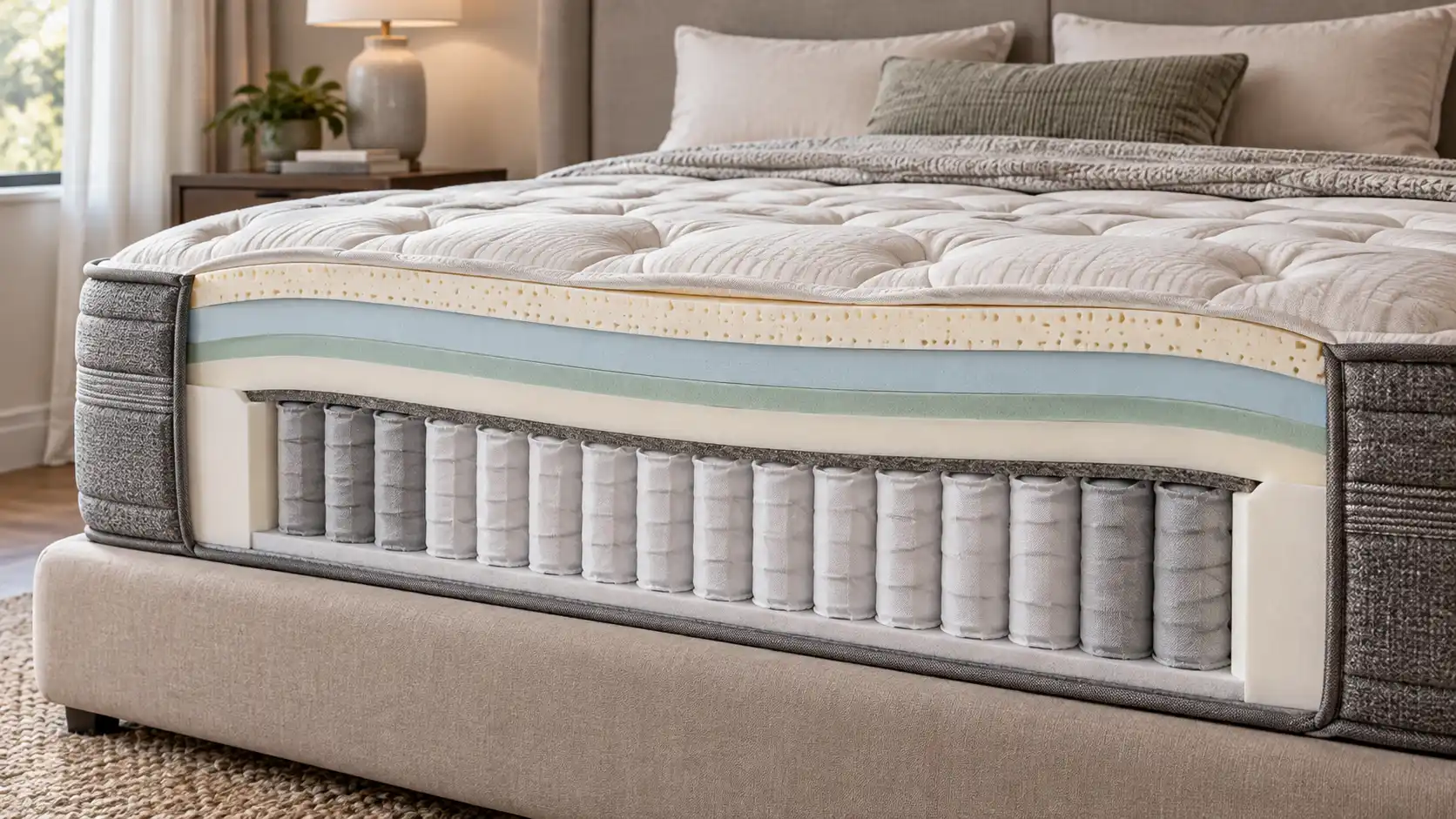
A supportive mattress helps prevent the heavier parts of your body from sinking excessively while allowing enough contouring for your body to rest naturally.
Ideally, your mattress should help your spine remain in a comfortable, relatively neutral position while you sleep.
The support may come from:
- Individually wrapped coils
- Traditional innerspring systems
- High-density support foam
- Latex
- Hybrid construction
- Zoned support systems
- Combinations of several materials
The softer comfort layers above that support system determine much of what you initially feel when lying on the mattress.
That means a mattress can have a strong coil support system underneath several inches of plush foam.
The mattress may feel soft.
But the underlying construction can still provide substantial support.
Conversely, a mattress can feel extremely firm without necessarily being the best match for your body.
Why “Firmer” Does Not Automatically Mean “More Supportive”
It is easy to understand why people associate firmness with support.
If something feels hard and resistant, it seems logical that it must be holding you up better.
But sleeping comfortably requires more than simply preventing your body from sinking.
Your shoulders, hips and other curves still need somewhere to go.
Imagine a side sleeper lying on an extremely hard surface.
The shoulder and hip may not sink enough to accommodate the natural shape of the body. Instead, those areas absorb much of the pressure while the waist receives relatively little contact with the sleeping surface.
A mattress with more contouring can allow the shoulder and hip to settle comfortably while the support system beneath the comfort layers continues to support the rest of the body.
In that situation, a somewhat softer mattress may actually create a more appropriate sleeping position for that particular person.
That doesn’t mean soft mattresses are always better either.
If a mattress allows the midsection or hips to sink too deeply, the sleeper may feel as though they are falling into the mattress rather than being comfortably supported.
The goal is not simply to choose the hardest mattress available.
It is to find the right combination of comfort and support for your body.
Your Body Weight Changes How Firm a Mattress Feels
Mattress firmness is also surprisingly subjective.
Two people can lie on the exact same mattress and describe it completely differently.
Body weight is one major reason.
A lighter sleeper may not compress the comfort layers very much. As a result, a particular mattress may feel fairly firm.
A heavier sleeper places more pressure on those same materials and may sink farther into them, making the mattress feel softer.
This is why reading a firmness number online does not always tell you exactly how a mattress will feel in your bedroom.
The number describes the mattress.
It does not describe how you will interact with it.
Sleeping Position Matters Too
Your preferred sleeping position can also influence the firmness that feels most comfortable.
Side sleepers
Side sleepers typically place considerable pressure on their shoulders and hips.
Enough cushioning is needed to allow those areas to settle into the mattress comfortably while the rest of the body remains supported.
An excessively firm mattress can sometimes create uncomfortable pressure around the shoulder or hip.

Back sleepers
Back sleepers often prefer a balance between contouring and resistance.
The mattress should accommodate the natural shape of the body without allowing the hips to sink dramatically below the rest of the torso.
For many people, that balance falls somewhere in the medium to medium-firm range, although individual preferences vary considerably.
Stomach sleepers
Stomach sleepers often prefer a firmer feel because excessive sinking through the midsection can create an uncomfortable sleeping position.
However, “firmer” still does not necessarily mean choosing the hardest mattress in the store.
Body weight, mattress construction and personal comfort all remain important.
Combination sleepers
People who change positions throughout the night may prefer a mattress that provides enough cushioning for side sleeping while still offering enough resistance for back or stomach sleeping.
Responsiveness can also matter because some mattress materials make changing positions easier than others.
Comfort Layers and Support Cores Work Together
A useful way to understand modern mattresses is to think of them as having two broad jobs.
The upper part of the mattress primarily provides comfort and pressure relief.
The deeper portion primarily provides support and stability.
For example, a hybrid mattress might contain several inches of memory foam or another cushioning material above a system of individually wrapped coils.
Those upper layers can provide a plush or medium feel.
The coil system underneath can still provide substantial support and help maintain the overall structure of the mattress.
That is why simply pressing your hand into the top of a mattress does not tell you very much about its overall support.
You need to experience how the entire mattress responds when your full body weight is resting on it.
A Soft Mattress Isn’t Necessarily Unsupportive
This misconception is worth addressing directly.
Soft mattresses sometimes get described as though they are automatically weak, saggy or lacking support.
A properly constructed soft mattress does not have to be any of those things.
The softness may come entirely from the comfort materials near the surface.
Underneath them may be a substantial support system designed to prevent excessive sinking.
For someone who prefers more cushioning — particularly certain side sleepers — this combination can offer both comfort and support.
The question is not:
“Is this mattress soft?”
A better question is:
“Does this mattress allow my body to settle comfortably while still supporting me where I need it?”
A Firm Mattress Can Still Be the Right Choice
None of this means firm mattresses are bad.
Far from it.
Many sleepers genuinely prefer a firmer surface.
Stomach sleepers, some back sleepers and people who simply dislike the sensation of sinking deeply into a mattress may feel much more comfortable on a firmer model.
Firm mattresses can also be easier for some people to move around on because they generally provide more resistance against the body.
The mistake is not choosing a firm mattress.
The mistake is assuming that everyone needs one because firm automatically equals supportive.
It doesn’t.
Don’t Choose a Mattress by Firmness Label Alone
Firmness descriptions are useful for narrowing down your choices, but they should not be the only thing you consider.
Look at the complete mattress.
Consider:
- Your normal sleeping position
- Your body weight
- Whether you prefer sleeping “on” or “in” a mattress
- Pressure relief around your shoulders and hips
- How easily you can change positions
- How the mattress supports your midsection
- Whether you share the mattress with someone who has different preferences
- The materials and support system inside the mattress
And whenever possible, spend more than a few seconds trying a mattress.
Lie in the position you normally sleep in and give your body time to settle.
A mattress that feels comfortable for ten seconds while sitting on the edge may feel completely different after several minutes in your normal sleeping position.
There Is No Single “Correct” Mattress Firmness
Perhaps the most important thing to understand about mattress firmness is that there isn’t one firmness level that works for everybody.
A mattress can be beautifully made, extremely supportive and highly rated — and still not be the right mattress for you.
That is because comfort depends on the interaction between the mattress and the person sleeping on it.
Your body shape, weight, sleeping position and personal preferences all affect how a mattress feels.
Even two people of similar size may prefer very different mattresses.
That is normal.

Focus on the Right Balance of Comfort and Support
When shopping for a mattress, don’t automatically equate harder with healthier or softer with less supportive.
Instead, look for a mattress that provides enough cushioning to keep you comfortable while maintaining the support your body needs throughout the night.
Firmness tells you something about how a mattress feels.
Support tells you something about how it performs.
Understanding the difference between the two can help you look beyond the label — and make it much easier to find a mattress that actually feels right when you lie down.
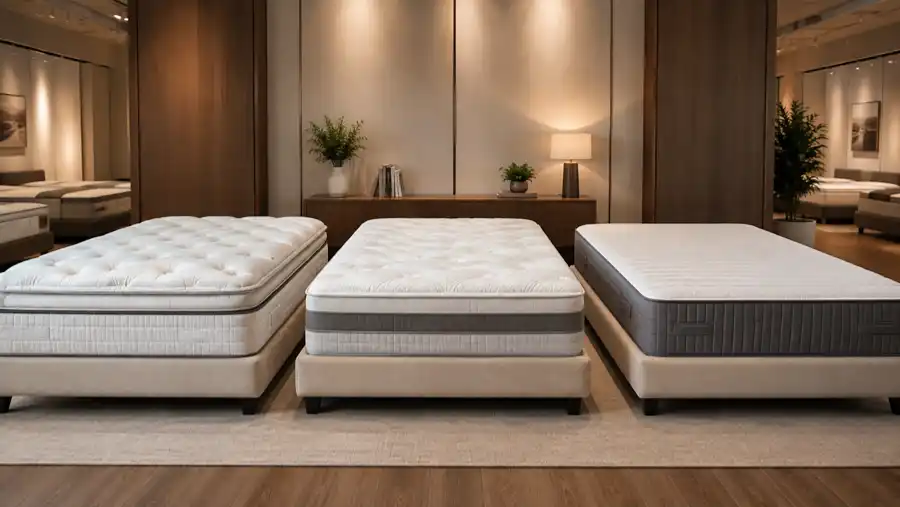
At The Sleep Center, you can compare different mattress constructions and firmness levels in person and experience how each one responds to your body. Trying several mattresses side by side can often tell you far more than a firmness number ever could.
After all, the best mattress isn’t simply the firmest mattress.
It’s the one that gives you the right combination of comfort and support.
Explore Mattress Education
Related Articles
Sealy Mattress Comparison: Soft, Medium or Firm – Which Is Right for You?
Choosing a new mattress gets much easier once you know how you want it to feel. Some sleepers love the cushioned, sink-in comfort of a soft mattress. Others…
Read Article
Pillow Top vs. Euro Top: What’s the Difference?
Pillow top. Euro top. These are two mattress terms that many shoppers hear and immediately file under “sounds comfortable, but what is the difference exactly?” That confusion is…
Read Article
Can You Use Any Mattress on an Adjustable Base?
Adjustable bases have become a lot more popular, and for good reason. They can make reading, relaxing, and finding a comfortable sleep position easier than ever. But once…
Read ArticlePut what you’ve learned into practice.
Visit a Sleep Center showroom to compare mattresses and sleep products in person with pressure-free help from experienced specialists.
Find a Sleep Center