Your first mattress can shape 7+ hours of sleep every night—and you don’t need to blow your move‑in budget to get it right. Adults 18–60 should aim for at least seven hours, so choosing the right build matters for comfort, cooling, and support. See why the materials under the cover change everything and how to match them to your room, sleep style, and wallet. According to the CDC, adults 18–60 need “7 or more hours” of sleep per night, a target your mattress can help you reach. CDC sleep basics. (cdc.gov)
Start Here: What to Expect From Hybrid vs Foam vs Innerspring Mattresses
Think construction first. All‑foam beds excel at pressure relief and quiet, innersprings deliver bounce and airflow, and hybrids mix coils with foam for balanced support. Start with how you sleep, then layer in budget and room constraints.
Foam often feels like a hug and dampens noise—great for roommates and thin walls. Innersprings feel lifted and responsive, helping hot sleepers. Hybrids blend contouring comfort with springy support to cover more sleepers in shared apartments.
A 20‑second map
If you want the “quietest” bed, start with foam. If you run hot or like a lively feel, short‑list innerspring. If you need a middle path for mixed sleepers, put hybrids at the top.
And if you want to see these mattress types (and other sleep + comfort essentials) from local Florida stores, here are quick links you can explore any time:
-
Panama City, FL: https://www.thesleepcenter.info/
-
Ft. Walton, FL: https://www.thesleepcenter.us/
-
Pensacola, FL: https://www.sleepcentersuperstores.com/
-
Gainesville, FL (both locations): https://www.gainesvillesleepcenter.com/
-
The Villages, FL: https://www.sleepcentervillages.com/
1) Price and Value: Best Budget Mattress for a First Apartment
Stretching dollars is easier when you match materials to expectations. Entry all‑foam models tend to be the best budget mattress for a first apartment, while mid‑priced hybrids add coils for lift and cooling. Innersprings span budget to midrange depending on coil design and padding.
Look for clear specs, honest trial periods, and at least a 10‑year warranty. Direct‑to‑consumer brands often run evergreen sales, but don’t chase MSRP—compare final price, trial, and return terms.
Real‑world example
Alex, a grad student, chose a medium‑firm foam queen to control noise and cost, then added a breathable protector later. The total stayed under their moving budget without sacrificing comfort.
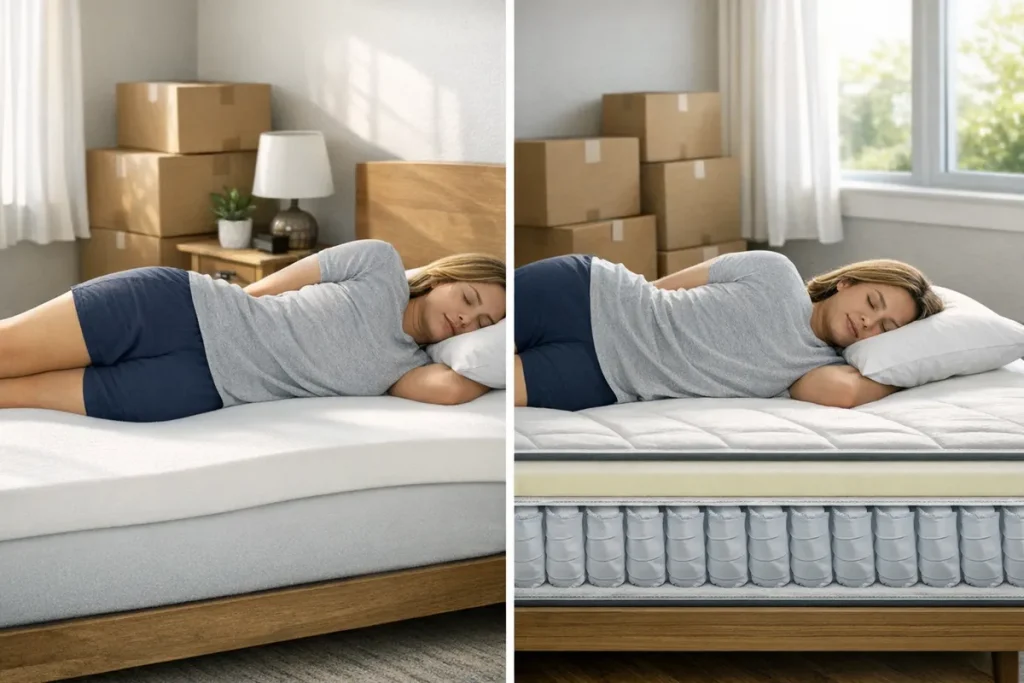
2) Comfort and Sleep Position: Foam vs Hybrid for Side Sleepers, Back and Stomach Support
Comfort starts with alignment. Side sleepers usually need plush contouring at shoulders and hips; back and stomach sleepers need flatter support to keep the spine even. That’s why many side sleepers prefer all‑foam or a plush hybrid, while back/stomach sleepers often pick firmer hybrids or supportive springs.
Foam vs hybrid for side sleepers comes down to feel. All‑foam offers deeper “hug” and pressure relief; a medium hybrid adds coils to prevent sinking while still cushioning.
Quick position cues
- Side sleepers: Medium to medium‑firm foam or plush hybrid for pressure relief.
- Back sleepers: Medium‑firm hybrid or firm foam to support the lumbar area.
- Stomach sleepers: Firm hybrid or innerspring to keep hips from dipping.
3) Cooling and Airflow: Innerspring vs Foam Cooling, and When Hybrids Help
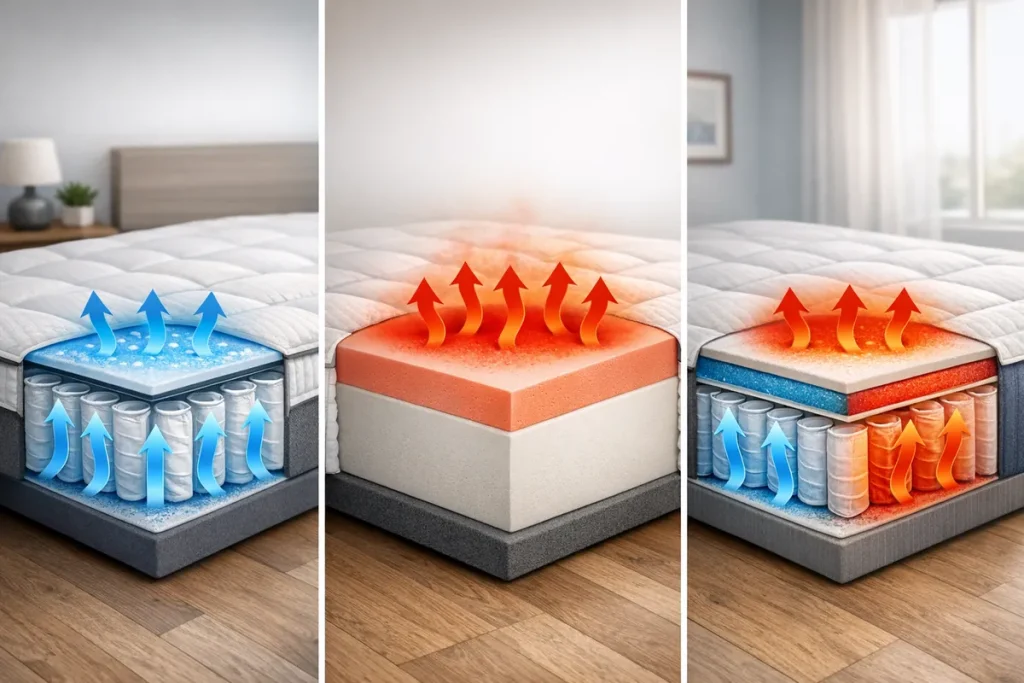
Airflow lives in the core. Traditional foam holds heat closer to the body, while coil cores promote air circulation that can feel cooler. Hybrids help hot sleepers by pairing breathable coils with comfort foams or cooling covers.
If you run warm, shortlist innersprings and breathable hybrids; for foam, look for gel‑infused, open‑cell, or phase‑change fabrics and lighter covers.
Small‑space tip
Place your bed to catch airflow from a fan or window and use a breathable base—not the floor—to reduce trapped heat under foam beds.
➡️ Want to browse what’s available at your closest store? Start here:
Panama City: https://www.thesleepcenter.info/ |
Ft. Walton: https://www.thesleepcenter.us/ |
Pensacola: https://www.sleepcentersuperstores.com/
4) Motion Isolation for Couples on a Budget: Which Mattress Type Moves Less?
All‑foam wins on quiet. Memory foam and dense polyfoams absorb movement, making motion isolation for couples on a budget a strong reason to choose foam. Hybrids with pocketed coils and thicker foam layers can also perform well; basic innersprings typically transfer the most movement.
If your partner studies late or works shifts, prioritize foam or a hybrid with individually wrapped coils.
Night‑shift roommate example
Maya swapped a bouncy innerspring for a medium foam model and stopped waking when her partner turned over.
5) Durability and Lifespan: Do Hybrid Mattresses Last Longer Than Foam or Innerspring?
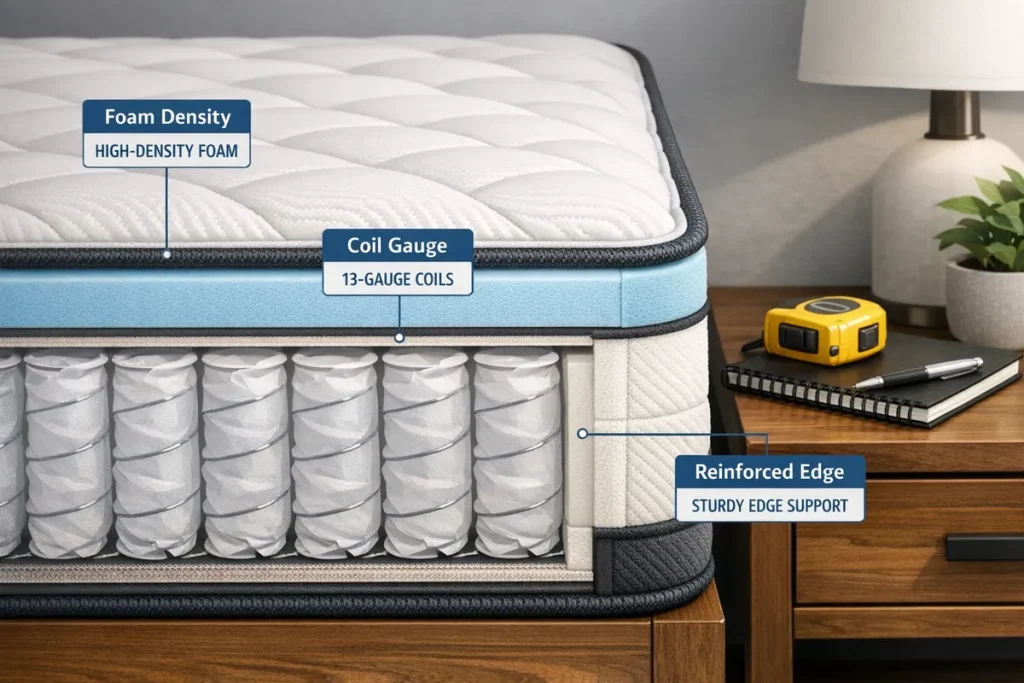
Build quality is destiny. On average, hybrids last about 6.5–7.5 years, foam about 6–7, and innersprings about 5.5–6.5—with latex often topping them all. High‑density foams and low‑gauge (thicker) coils tend to extend life.
So, do hybrid mattresses last longer? Often, yes—mainly because many hybrids use sturdier coils and better foams than entry‑level beds. Check foam densities and coil specs, and favor at least a 10‑year warranty.
Quick inspection checklist
- Foam quality: Favor higher‑density comfort foams.
- Coil design: Pocketed coils with reinforced edges resist sagging.
- Care: Rotate regularly and use a protector to slow wear.
➡️ If you’re shopping locally and want to compare comfort styles in person, check your nearest Sleep Center store:
The Villages: https://www.sleepcentervillages.com/ |
Gainesville: https://www.gainesvillesleepcenter.com/
6) Delivery, Setup, and Room Fit: Mattress in a Box, Weight, and Small-Space Tips
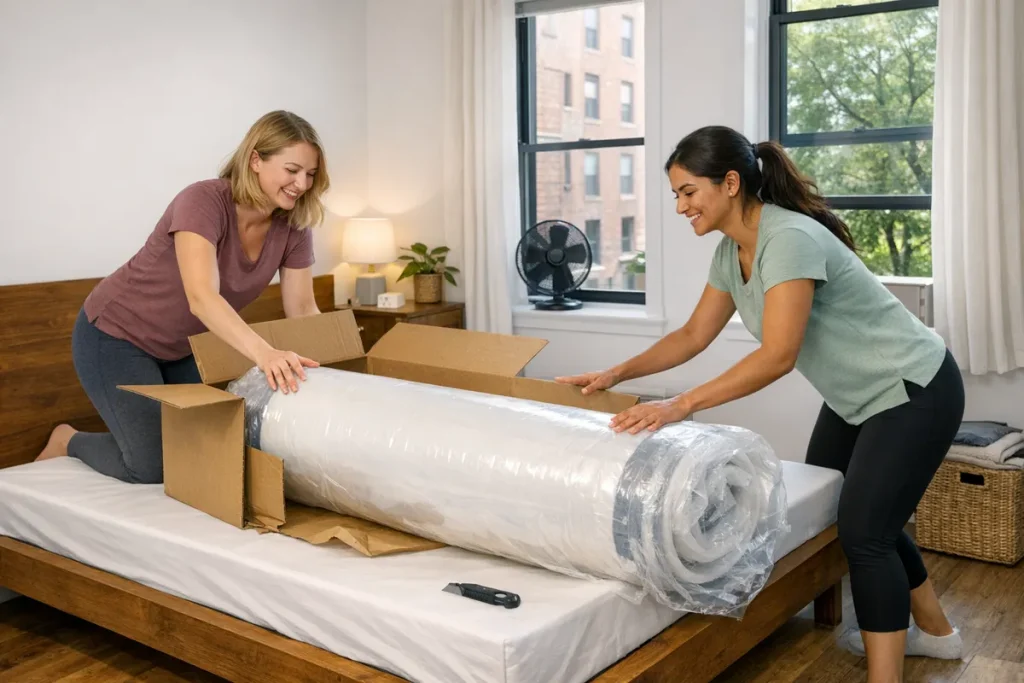
Think logistics before checkout. A mattress in a box simplifies narrow hallways and walk‑ups, but boxes can still be heavy; move them to the bedroom before unwrapping. Expect full expansion in 24–72 hours, and plan your base first.
Set expectations: keep packaging until you decide to keep the bed, and review return rules. For setup steps, weights, and trial/return advice, see Consumer Reports’ guidance on mattress‑in‑a‑box setup and policies. (consumerreports.org)
Small‑space playbook
Clear a path, unbox on the frame, and ventilate the room for off‑gassing. In shared apartments, schedule deliveries when a friend can help lift.
7) Bounce, Feel, and Edge Support: How Construction Changes Your Sleep Experience
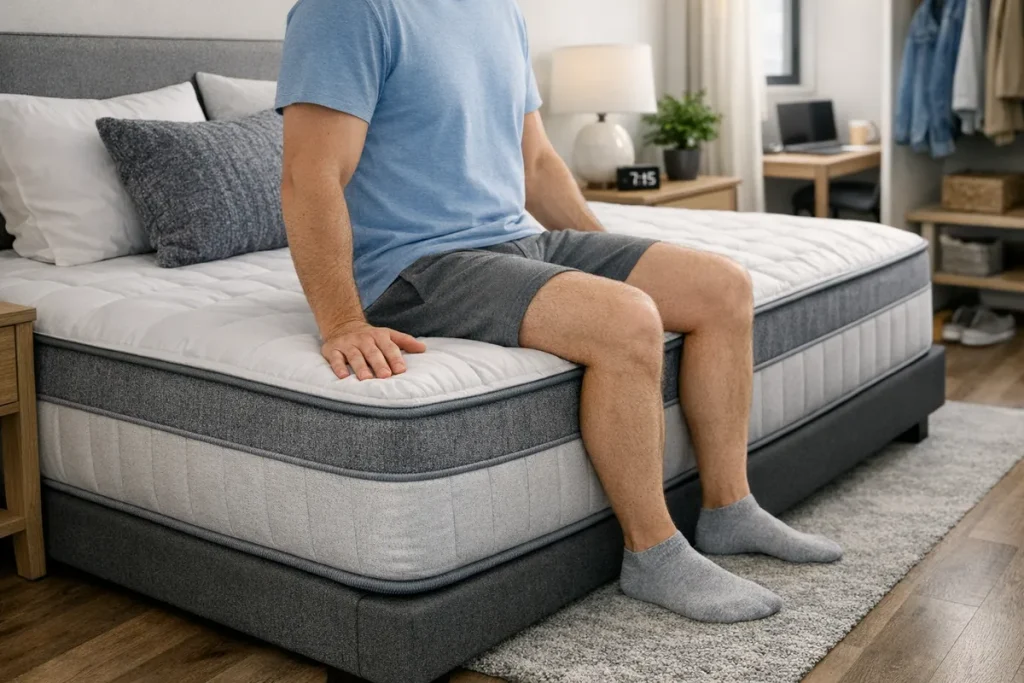
Feel affects more than comfort. Spring systems add bounce for easy movement; thick foams give a slow‑responding “hug.” Edge reinforcement expands usable space—a big win in smaller rooms or for sit‑to‑stand support.
If you often sit to dress, look for reinforced edges in hybrids/innersprings or firmer all‑foam builds.
Studio saver
Jordan chose a hybrid with a coil‑reinforced perimeter so two people could share a full without feeling like the edge would give.
Quick Comparison: When to Choose Foam, Hybrid, or Innerspring (Decision Guide)
Make the call in 30 seconds. Use this snapshot to match type to your priorities.
- Choose foam if you want the quietest bed, top pressure relief, and the lowest upfront cost.
- Choose a hybrid if you need balanced support, better airflow, and edge strength for smaller beds.C
- Choose innerspring if you sleep hot, love bounce, and prefer a lifted feel.
Budget-Friendly Picks: See Deals on Foam, Hybrid, and Innerspring
Sales can change the value equation overnight. Watch for holiday promos, student discounts, and bundle credits for pillows or bases. If you’re price‑anchored, start with foam under a tight cap, then test hybrid upgrades when promotions hit.
Find current local and online promotions here: The Sleep Center – Deals near you.
How to stretch your budget
Time purchases around major holidays, compare final price after trial/return terms, and don’t forget a breathable protector to extend mattress life.
Ready to lock in a deal that fits your room and routine? Compare foam, hybrid, and innerspring prices now at The Sleep Center.
Summary and Next Step: Match Your Sleep Style to the Right Mattress (Conclusion)
Start with your sleep position, then choose the build that supports it—foam for quiet pressure relief, hybrid for balance, innerspring for airflow and bounce. Your best pick is the one that fits your body, your budget, and your space.
Two smart guardrails steer you clear of buyer’s remorse: set a realistic price cap and commit to the full trial window before deciding. Aim for consistent sleep—7+ hours a night—and let your mattress do its job while you handle routines like rotation and breathable bedding. For healthy sleep targets, see the CDC’s guidance on adult sleep duration. CDC adult sleep recommendations. (cdc.gov)
Want personalized help before checkout? See live promotions and talk to a sleep pro at:
-
Panama City, FL: https://www.thesleepcenter.info/
-
Ft. Walton, FL: https://www.thesleepcenter.us/
-
Pensacola, FL: https://www.sleepcentersuperstores.com/
-
Gainesville, FL (both locations): https://www.gainesvillesleepcenter.com/
-
The Villages, FL: https://www.sleepcentervillages.com/
FAQs
Do hybrids sleep cooler than foam? Generally yes. Coils increase airflow under the comfort layers, which helps hybrids sleep cooler than most solid‑foam cores. If you still run hot, pair breathable sheets with a lighter duvet.
What firmness should I get for side sleeping? Most side sleepers do well on medium to medium‑firm. Foam vs hybrid for side sleepers comes down to feel: foam hugs more, while a medium hybrid helps prevent sinking while still cushioning shoulders and hips.
Do hybrid mattresses last longer than basic innersprings? Often. Many hybrids use sturdier coils and denser foams, so they resist sagging and body impressions better than entry‑level innersprings when cared for properly.
Is a mattress in a box hard to set up in a small apartment? Not if you plan ahead. Move the box to the bedroom first, unbox on the frame, and ventilate for 24–72 hours. Keep packaging until you’re sure you’ll keep it.
Which type is best for motion isolation for couples on a budget? All‑foam typically isolates motion best. If you prefer some bounce, look for hybrids with pocketed coils and thicker foam layers to dampen movement.

 We are here to help, so please let us know what we can do to make your dreams come true!
 We know that shopping for a new mattress or bedding accessory can be overwhelming & tiring!