Why Healing Speed Matters: Setting Up the Adjustable Beds vs. Smart Mattresses Debate
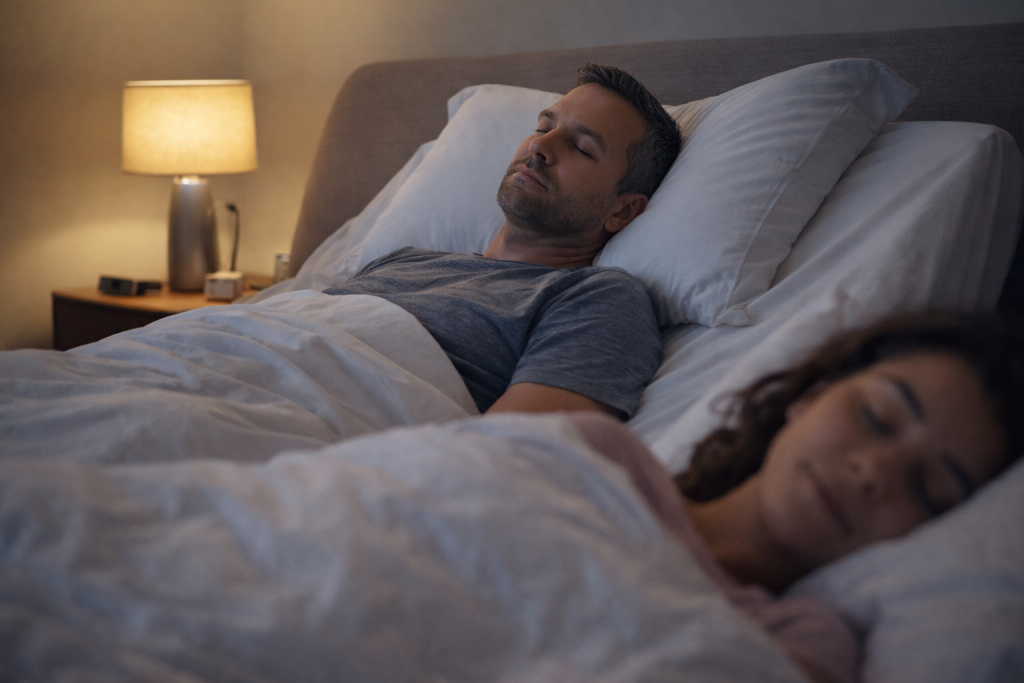
One in three adults isn’t getting enough sleep—and that slows healing, amplifies pain, and drains daytime performance. For people managing back pain, sciatica, or snoring, the right sleep setup can add hours of quality rest each week. Adjustable beds and smart mattresses both promise faster relief, but they work very differently.
Sleep health isn’t just comfort—it’s measurable recovery. The CDC’s latest data shows persistent short sleep across the U.S., which correlates with poorer health outcomes and productivity. See the scope in CDC’s Sleep Facts and Stats. If you’re optimizing sleep like you would training or rehab, you want the option that improves metrics you can track.
This guide cuts through features and buzzwords. You’ll learn how adjustable beds ease pain through position, how smart mattresses sense and respond, and which option moves the needle fastest for your condition. By the end, you’ll know exactly what to test for 30–60 days—and whether to prioritize an adjustable base, a smart surface, or both.
Start a 30‑day sleep experiment. Set one goal (e.g., “reduce morning pain by 2 points” or “raise sleep efficiency by 5%”). Log nightly settings and next‑day pain/energy—then adjust weekly.
Table of Contents
How Adjustable Beds Work: Positions, Zero Gravity, and Mechanisms That Reduce Pain
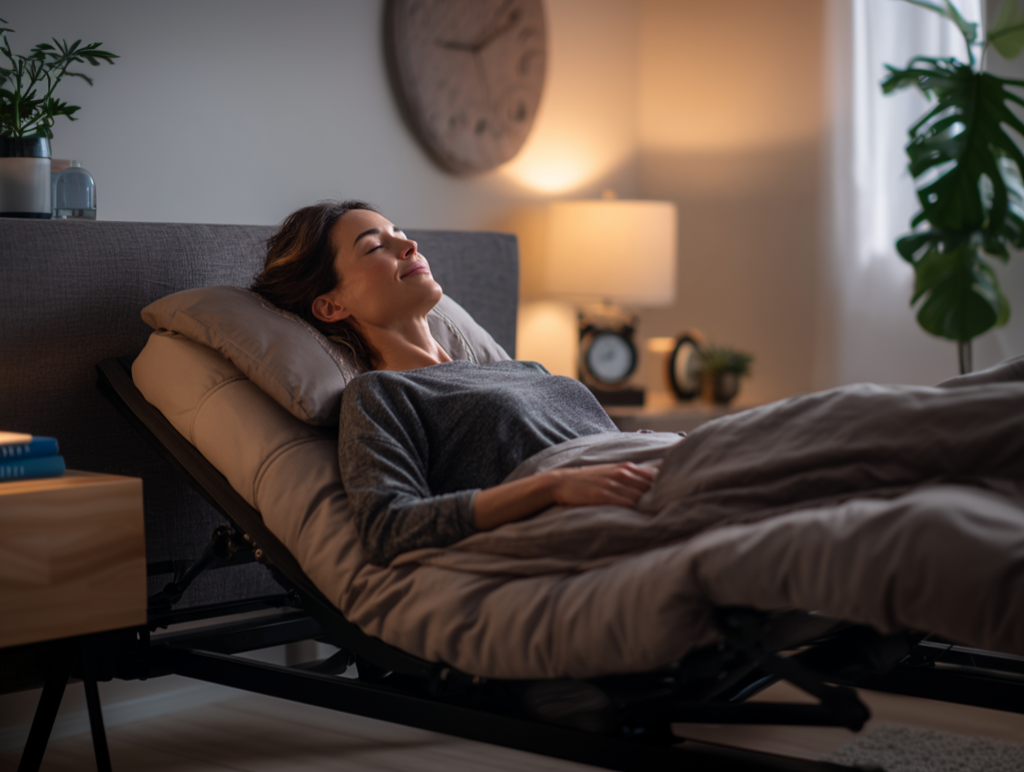
Adjustable beds reduce pain by changing angles—not foam. By elevating the head, knees, or both, you shift load away from sensitive joints, open the airway, and ease muscle tension. The popular “zero gravity” preset mimics a neutral posture that minimizes spinal stress.
The concept comes from NASA’s neutral body posture, a relaxed, low‑stress angle discovered in microgravity. Designers have used this posture for ergonomic seating and reclined positions because it reduces musculoskeletal strain and may improve breathing and circulation. Read the background on neutral posture in NASA’s ergonomic posture research.
For pain, two small changes help most: a slight head lift to unload the lower back, and light knee elevation to reduce hip and lumbar tension. Zero gravity is a strong starting point, not a rule. Nudge the head/foot up or down in 2–3° increments, then keep what improves your morning pain and sleep efficiency.
What Smart Mattresses Do: Sensors, Sleep Tracking, and Automated Comfort Adjustments
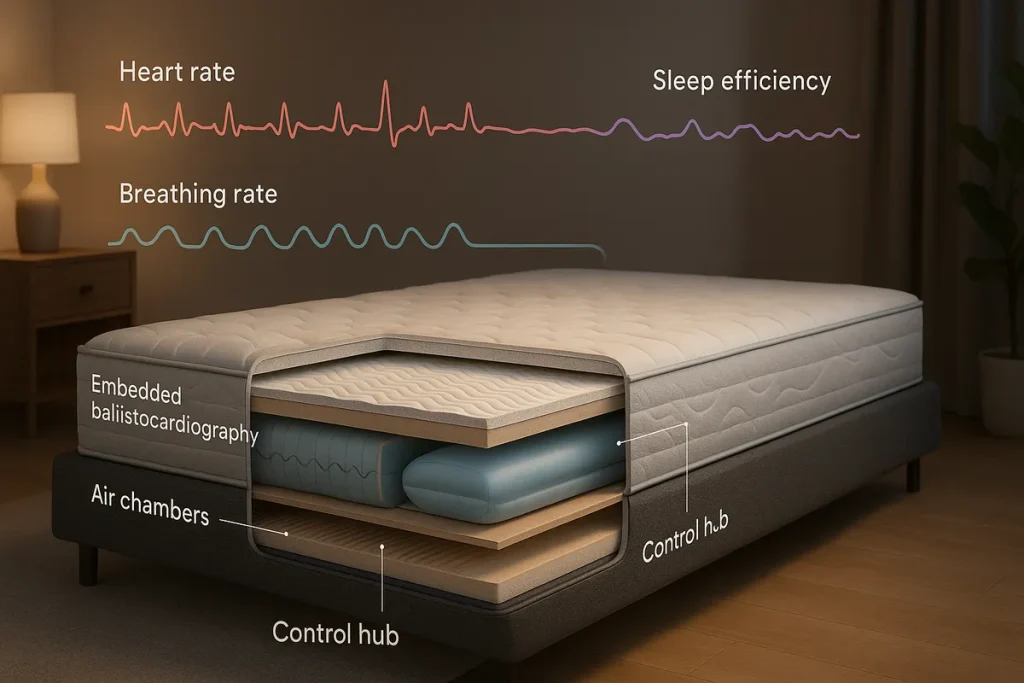
Smart mattresses don’t move your spine; they read your night. Embedded sensors estimate heart rate, breathing rate, movement, and sleep/wake to produce trends like sleep efficiency and wake after sleep onset. Some models adapt comfort—stiffening, softening, or adjusting temperature—based on sensed patterns.
Validation matters. Independent and industry studies show contactless bed sensors can classify sleep and measure cardio‑respiratory signals with high sensitivity, though wake detection often lags. That still makes smart beds powerful for long‑term trend tracking at home. See correlations with gold‑standard polysomnography in the 2022 Sensors paper summarized on PubMed: Performance Evaluation of a Smart Bed Technology against Polysomnography.
Automations vary by brand: some auto‑inflate air chambers to maintain firmness; others auto‑cool or warm throughout the night. The upside is effortless data; the tradeoff is accuracy limits for precise staging or wake time.
Healing Outcomes Defined: Pain Reduction, Sleep Efficiency, and Recovery Metrics You Can Track
Healing speed is about objective change, not vibes. For musculoskeletal pain, use a 0–10 pain scale in the morning and before bed. For sleep, target sleep efficiency (time asleep / time in bed) and wake after sleep onset. For recovery, watch resting heart rate and HRV trends.
Clinically, sleep efficiency sits at the core of insomnia and sleep‑quality research. A common definition—total sleep time divided by time in bed—has nuances that matter when you compare devices, diaries, and PSG. A useful primer is JCSM’s open‑access paper, “Measuring Sleep Efficiency: What Should the Denominator Be?”. Aim to raise sleep efficiency by 3–5% over 30–60 days while lowering morning pain by 1–2 points.
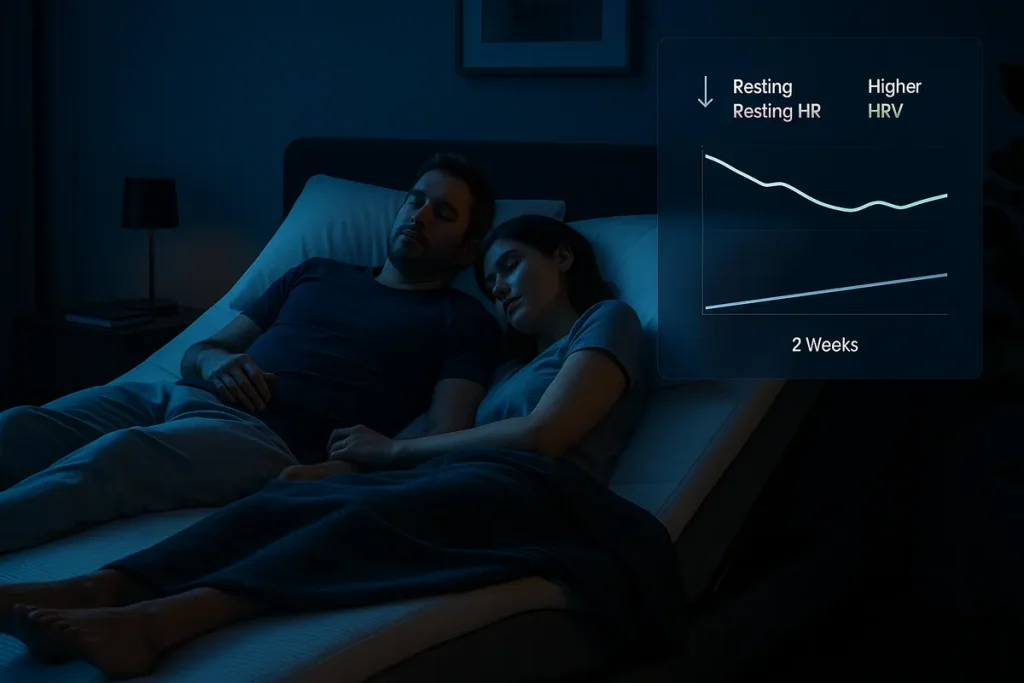
For recovery, track weekly averages rather than single nights. Falling resting HR and rising HRV usually signal improved parasympathetic tone—often following better sleep continuity and pain control.
Adjustable Bed Benefits for Back Pain: Spinal Alignment, Pressure Relief, and Muscle Relaxation
Small angle changes can unload big pain. A gentle head lift plus knees‑up positioning supports lumbar curves, reduces hip flexor tension, and eases paraspinal guarding. Many back‑pain patients report less morning stiffness after adopting a stable, slightly reclined setup.
Clinical advice for sleep posture aligns here: side‑sleepers benefit from a pillow between the knees; back‑sleepers often do better with a pillow under the knees—or with an adjustable base that creates the same effect. See positioning guidance from Mayo Clinic on sleeping positions for back pain. The win is consistent, neutral support—not extreme angles.
Test this: from flat, raise the head 10–15°, then the knees 10–20°. Keep the setting that gives the lowest morning pain for a full week before tweaking again.
Adjustable Bed vs Mattress for Snoring and Breathing: Elevation, Airflow, and Zero Gravity Position for Sleep
Head‑of‑bed elevation can reduce snoring and mild OSA severity. Raising the upper body improves airway patency and oxygen saturation for many positional snorers. Adjustable beds make this repeatable and comfortable compared to stacks of pillows.
Evidence shows that even modest elevation can lower AHI and raise minimum oxygen saturation without harming sleep architecture. A 7.5° elevation study found clinically meaningful improvements. Review the open‑access study in Sleep and Breathing: Head‑of‑Bed Elevation in Obstructive Sleep Apnea. If snoring wakes you or your partner, start with a 10–20° head lift and log changes in snore time and next‑day alertness.
Zero gravity may also help airflow by reducing thoracic loading, but prioritize head elevation first for snoring.
Smart Mattresses Comparison: Tracking Accuracy, Pressure Mapping, and Auto-Response Features
Smart beds shine at trend tracking—even if they overestimate sleep. Under‑mattress sensors and embedded arrays reach high sensitivity for sleep detection, but they often misclassify quiet wake. That’s fine for week‑over‑week trends, less so for minute‑by‑minute analysis.
In a large evaluation with 400+ nights, an under‑mattress sensor showed high sleep sensitivity but lower wake specificity—typical of consumer systems. That means your “time asleep” might read a little high, while changes across weeks still reflect reality. See results in Performance evaluation of an under‑mattress sleep sensor vs PSG. Use the data to compare yourself to yourself—not to a clinical PSG.
Auto‑response features differ: some adjust firmness hourly, others tweak bed temperature. Pressure‑mapping helps design and fitting, but at home your best guide is pain relief and next‑day energy, not a pretty pressure map.
Which Heals Faster for Different Conditions? Back Pain, Sciatica, GERD, Snoring, and Athletic Recovery
Back pain and sciatica usually respond faster to adjustable positioning. Offloading irritated tissues can lower pain in days, especially when you lock in a repeatable angle.
GERD often improves with head elevation. Raising the head of the bed reduces reflux events for many people; pillow stacks are unstable, so an adjustable base is the more consistent tool. Cleveland Clinic lists elevation among first‑line measures—see their GERD overview: Acid Reflux & GERD. Snoring/positional OSA also benefits from elevation; start there before app‑based snore gadgets.
For athletic recovery, smart surfaces help you see patterns (sleep efficiency, resting HR, HRV). If pain is your limiter, fix position first; if physiology pacing is your limiter, add sensing and temperature control.
Real-World Data: Sleep Tracking and Recovery Metrics to Monitor Progress Over 30–60 Days
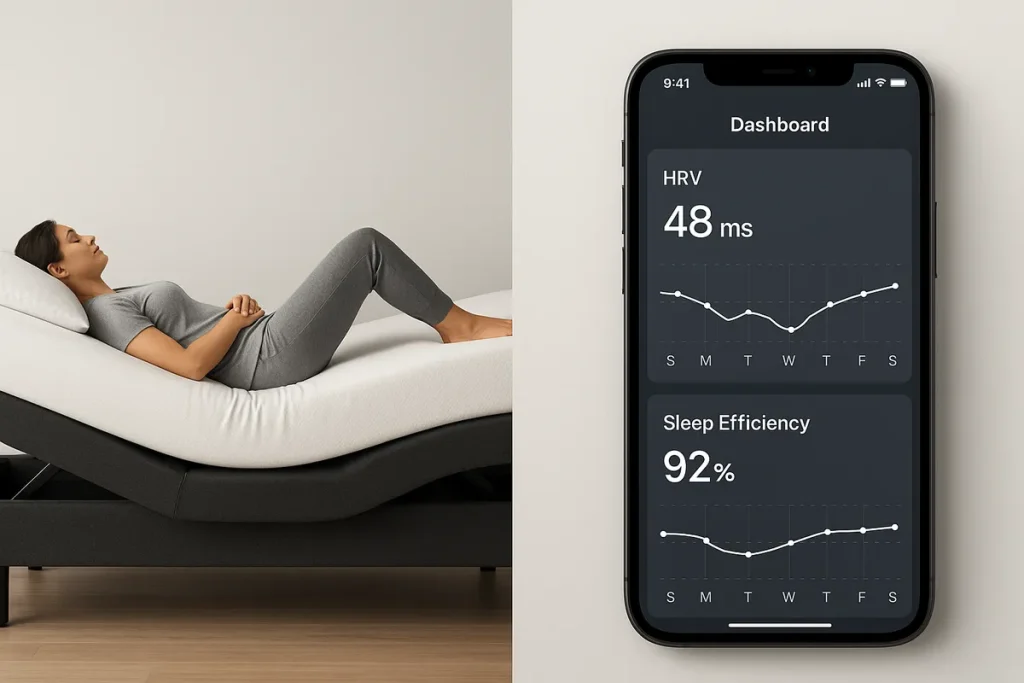
Pick two numbers and make them better. A simple plan: raise sleep efficiency by 3–5% and lower morning pain by 1–2 points in 30 days. Add resting HR (down) and HRV (up) as recovery markers.
HRV is a useful adjunct for training and recovery when interpreted as trends. Reviews in strength and conditioning show HRV can reflect adaptability and accumulated stress, with day‑to‑day noise that smooths over weekly averages. For context and best practices, see this narrative review: Heart Rate Variability Applications in Strength and Conditioning. Judge interventions by weekly means, not single nights.
Track weekly “win” notes too: fewer pain flares, fewer awakenings, or shorter sleep onset. Those often shift before headline metrics do.
How to Choose an Adjustable Base: Key Features, Compatibility with Smart Mattresses, and Budget Tiers
Focus on the mechanics that matter daily. Quiet motors, fine‑grained angle control, and a reliable “anti‑snore” preset beat flashy extras. Wall‑hugging helps keep your nightstand in reach as you raise the head.
Check mattress compatibility and split options (e.g., split‑king) if partners need different angles. Budget roughly from low‑mid hundreds to several thousand dollars depending on lift capacity, presets, and app/voice control. For a practical buyer overview, see Consumer Reports on adjustable bed frames. Buy once, cry once: prioritize motor quality and support.
Feature quick checks (use sparingly)
- Noise and smoothness: Quiet lift and stable hold at small angles
- Controls: Backlit remote + app; memory presets that you’ll actually use
- Fit: Under‑bed clearance for storage; leg height options; wall‑hugging if space is tight
Stacking the Tech: Pairing an Adjustable Bed with a Smart Mattress or Topper for Faster Results
Position fixes pain; microclimate boosts continuity. Many chronic‑pain sleepers wake from overheating or chills rather than pain itself. Temperature‑adaptive toppers can reduce awakenings and improve HRV alongside an adjustable base.
Early data from temperature‑responsive systems suggests improvements in deep sleep time, resting HR, and HRV when bed temperature adjusts in real time across the night. See a 2025 conference summary and methods overview here: Eight Sleep Autopilot temperature adjustments and outcomes. If your awakenings are heat‑related, add microclimate control first; if they’re pain‑related, tune angles first.
Buyer Pitfalls to Avoid: Noise, Motor Quality, App Ecosystem, and Warranty Considerations
Don’t let a loud motor sabotage your sleep. Listen for smooth, quiet lifts and check that the bed holds micro‑adjustments all night. App control should be stable; flaky Bluetooth or Wi‑Fi makes presets useless.
On coverage, look beyond “lifetime frame” to electronics and motors, which fail first. Many evaluators prefer at least a decade of meaningful coverage for moving parts, and highlight that many adjustable bases are final sale—know your terms. For a clear look at how reviewers weigh warranty and trials, see the NCOA Sleep review methodology. A great warranty is part sleep aid, part insurance.
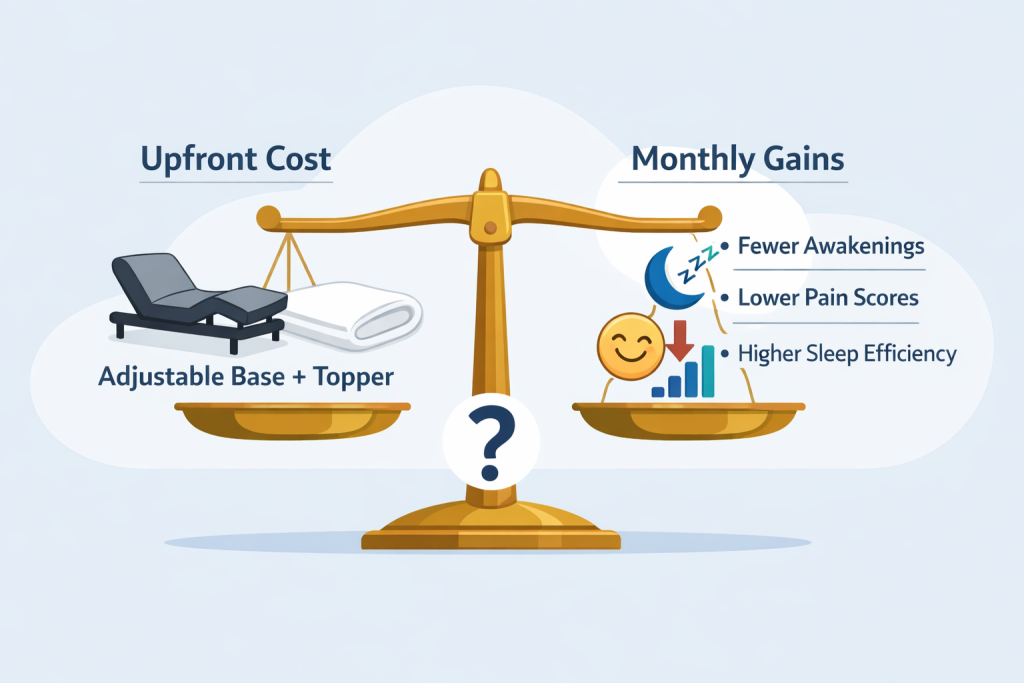
Cost–Benefit Snapshot: Time to Relief, Productivity Gains, and Total Cost of Ownership
The fastest wins come from angle changes when pain is the bottleneck. Many users feel measurable relief in days. Smart surfaces add value by proving trends and guiding tweaks, which compounds over months.
Zooming out, sleep has real economic stakes. RAND Europe estimates insufficient sleep costs the U.S. hundreds of billions annually in lost productivity—reminding us that better sleep returns real‑world time and energy. Skim the open‑access summary: Why Sleep Matters—Economic Costs of Insufficient Sleep. If a setup saves even 15 minutes of nightly wake time, that’s ~7.5 extra hours of sleep every month.
Quick Decision Framework: When to Prioritize an Adjustable Bed, a Smart Mattress, or Both
Choose angles when pain or snoring is primary. If GERD, back pain, sciatica, or snoring lead the story, start with elevation and zero‑gravity‑like positioning.
Choose sensing when pacing recovery is primary. If you’re training or biohacking and pain is mild, start with passive tracking and microclimate control, then add angle control later.
For habitual back‑sleep snorers or positional apnea, combine elevation with side‑bias strategies. See AASM’s overview of positional therapy options: AASM Sleep Education—Positional Therapy. Match the tool to the job; then test, log, and iterate for 30–60 days.
Ready to run your 60‑day plan? Set weekly checkpoints (angles, temperature, bedtime), keep metrics simple (pain 0–10, sleep efficiency, HR/HRV), and only change one variable per week.
Conclusion: What Heals Faster—and Your Next Step to Compare Adjustable Bed Options (Conclusion)
If pain or snoring keeps you up, an adjustable bed usually heals faster; if you’re optimizing recovery, a smart surface proves progress. Elevation and knee‑bend reduce load and open airways quickly; sensing and microclimate refine sleep continuity and recovery over weeks.
Pairing the two works best for many readers: dial angles to cut pain, then add temperature automation to stabilize sleep. Keep your experiment honest—track one or two metrics, adjust weekly, and stay with a setting long enough to judge it. If symptoms suggest sleep apnea or persistent insomnia, consult a sleep specialist through AASM’s patient resources.
Your next step: pick a goal, choose the tool that aligns, and start your 30‑day test tonight.
FAQs
Do adjustable beds help back pain right away?
Yes—many people feel relief within days because small angle changes unload the lumbar spine and hips. Start with a gentle head lift and slight knee elevation, hold for a full week, and only then adjust. The goal is a repeatable neutral position that lowers morning pain.
Will head elevation help my GERD at night?
Often, yes. Elevating the head of the bed reduces reflux for many sleepers by harnessing gravity. An adjustable base provides stable, consistent elevation compared with stacked pillows that shift as you sleep. If symptoms persist, consult your clinician.
Can smart mattresses accurately measure my sleep stages?
They estimate, not diagnose. Contactless sensors are highly sensitive to sleep but less specific for wake, so “total sleep” can be a bit high. Use trends across weeks (sleep efficiency up, awakenings down) rather than expecting clinical accuracy for single nights or precise stages.
Is the zero gravity position safe to use every night?
For most healthy adults, yes. It’s a mild, low‑stress posture that eases spinal load and may improve comfort. Keep angles modest and adjust if you feel hip flexor tightness or upper‑back strain; small tweaks often resolve it.
How long until I see measurable improvements?
Expect signal within 1–2 weeks and clearer trends by 30–60 days. Pain often improves first with angle changes; sleep efficiency and HRV trends stabilize with consistent schedules and microclimate control. Track weekly averages to judge progress.

 We are here to help, so please let us know what we can do to make your dreams come true!
 We know that shopping for a new mattress or bedding accessory can be overwhelming & tiring!