
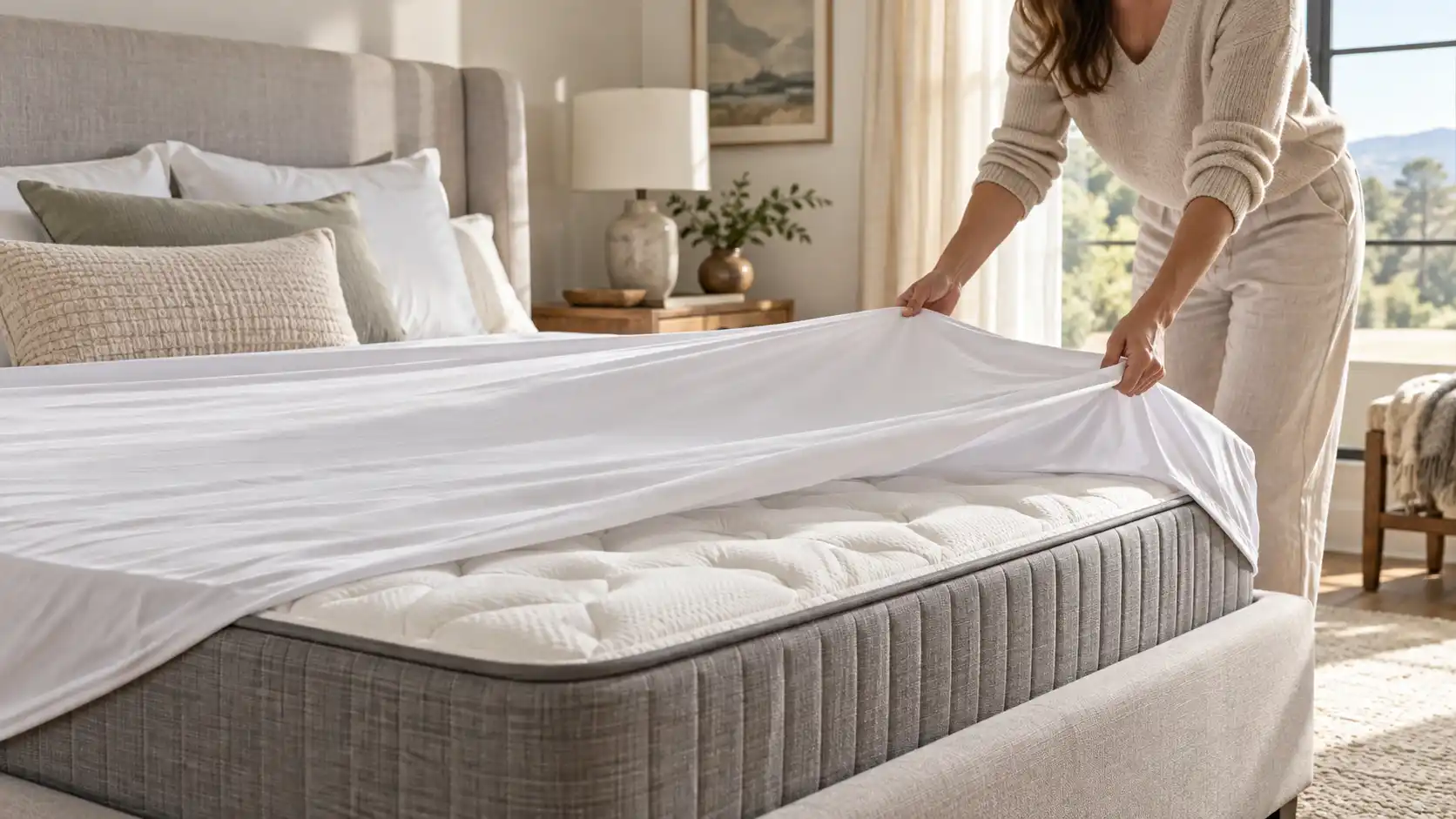
You spent time finding a mattress with the right amount of softness, support and pressure relief. The last thing you want to do is cover it with something that changes the way it feels.
That is one of the most common concerns people have about mattress protectors.
Will a mattress protector make my mattress feel firmer?
Will I still feel the cushioning of the comfort layers?
Will a waterproof protector make the bed hot or noisy?
The short answer is that a well-made mattress protector should have very little effect on the overall feel of your mattress.
However, not every mattress protector is made the same way. Thickness, materials, waterproof construction and fit can all make a difference.
Here is what to look for if you want to protect your mattress without covering up the comfort you bought it for.
A Mattress Protector Is Not the Same as a Mattress Pad
It helps to start with an important distinction.
A mattress protector is primarily designed to protect the mattress from things such as spills, moisture, perspiration, dust and everyday wear.
Most modern protectors are relatively thin.
A mattress pad, on the other hand, usually contains additional cushioning and is specifically designed to alter or enhance the comfort of the bed.
Then there are mattress toppers, which are considerably thicker and may use memory foam, latex or other materials to noticeably change the feel of the mattress.
If your goal is simply to protect your new mattress while preserving its existing comfort, a thin mattress protector is usually the better choice.
So, Can You Feel a Mattress Protector Through the Sheets?
With the right protector, probably not very much.
A lightweight protector that fits securely around the mattress should generally disappear beneath your fitted sheet.
You may notice a slight difference if you compare the mattress side by side with and without the protector, but it should not dramatically change whether your mattress feels soft, medium or firm.
Problems are more likely to occur when the protector is:
- unusually thick
- heavily quilted
- stiff or poorly fitted
- made from a less flexible waterproof material
- stretched too tightly across the mattress surface
A protector that bunches, pulls or creates a tight layer over the top of the mattress can interfere with the way softer comfort layers respond to your body.
That is why the construction and fit of the protector matter.
Thin Protectors Usually Preserve Mattress Feel Best
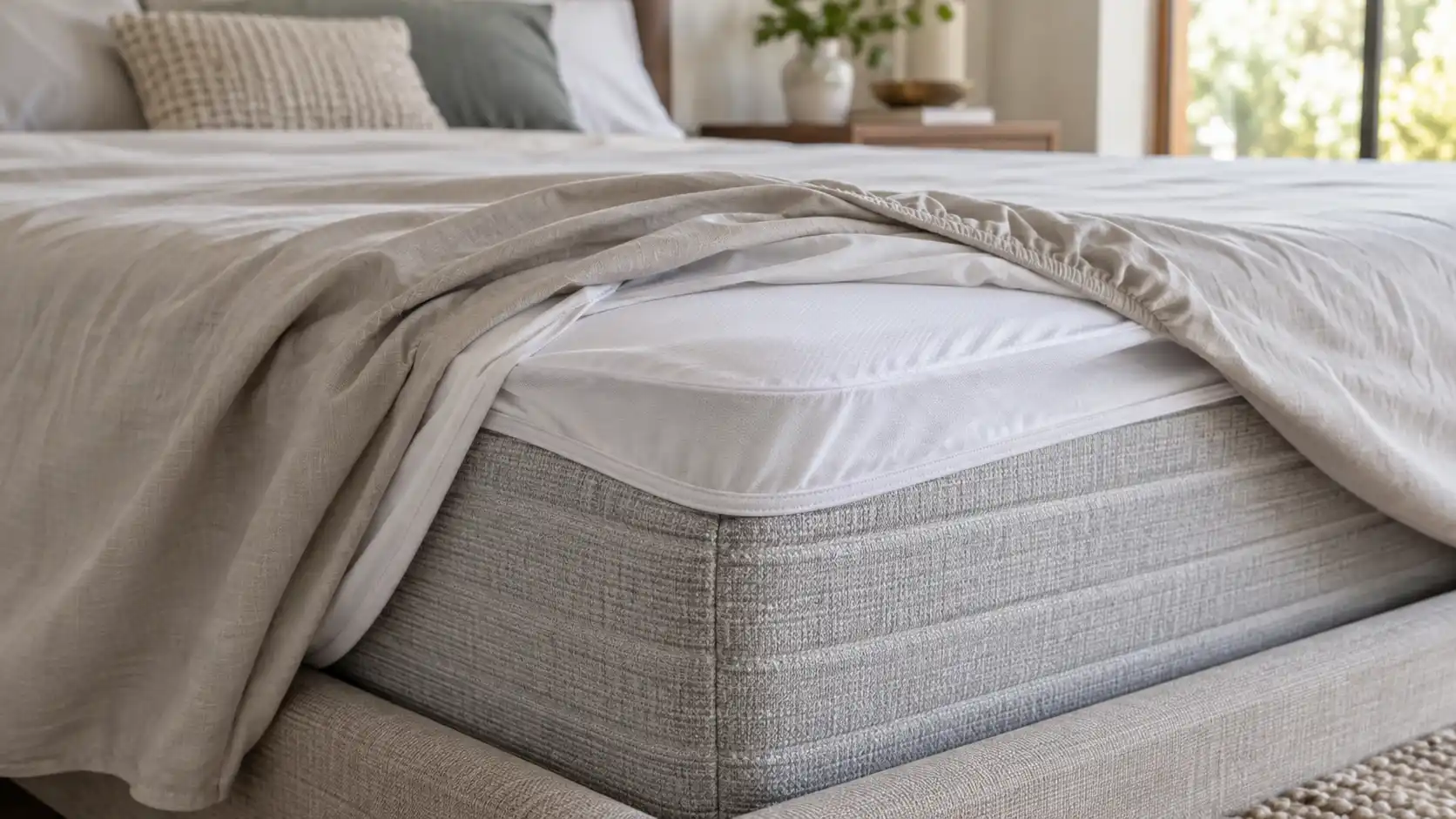
If maintaining the original feel of your mattress is your priority, look for a protector with a thin, flexible design.
This is especially important with mattresses that have softer or more responsive comfort layers.
For example, if you purchased a mattress because you liked how the surface gently contours around your shoulders and hips, you probably do not want to place a thick layer of padding over it.
A thin protector allows you to protect the mattress while still experiencing the comfort system underneath.
Think of it less like adding another mattress layer and more like adding a protective barrier beneath your sheets.
What About Waterproof Mattress Protectors?
Waterproofing is often the feature shoppers worry about most.
Older waterproof bedding products earned a reputation for feeling stiff, crinkly or even a little like sleeping on plastic.
Thankfully, mattress protector construction has improved considerably.
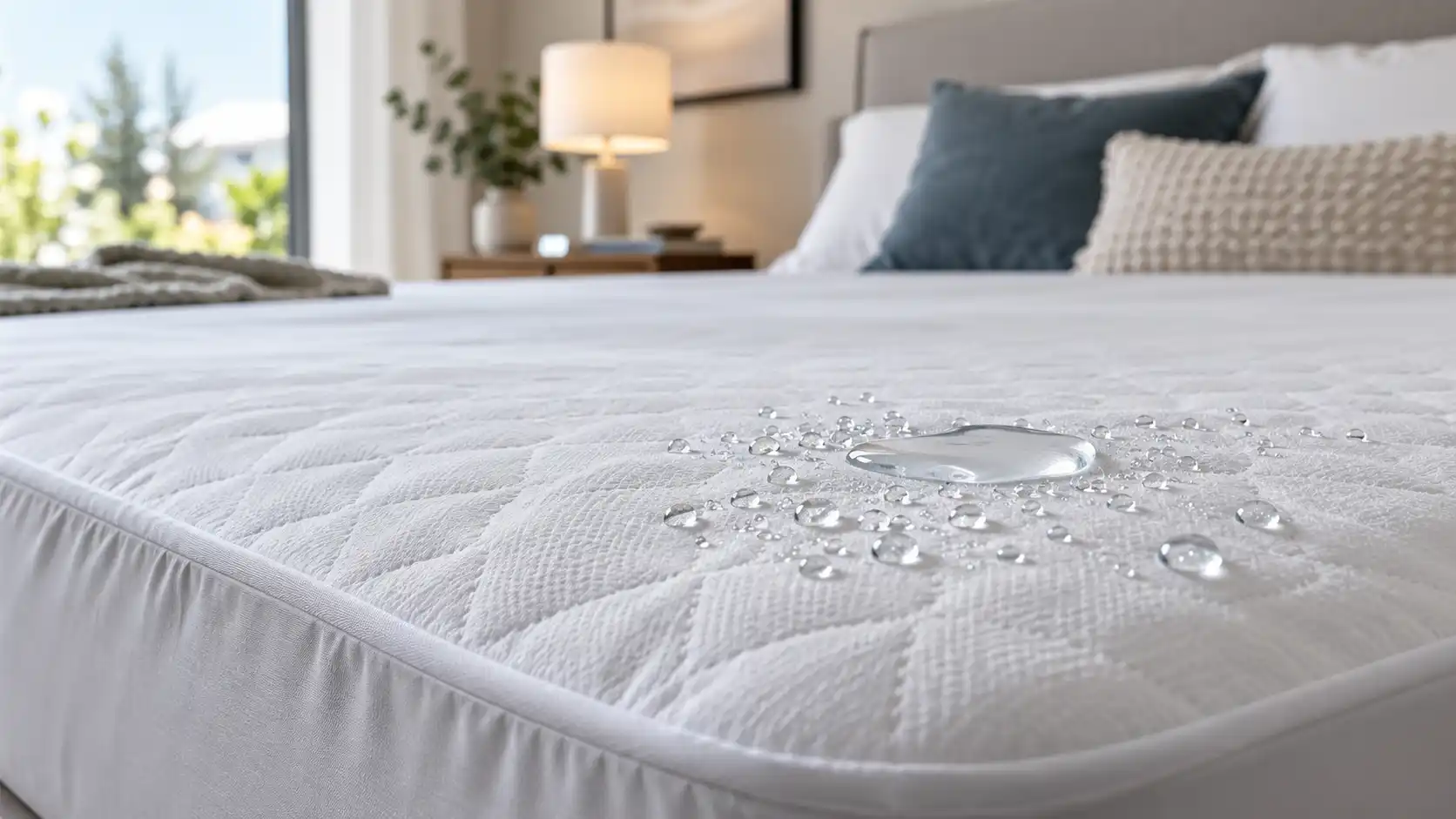
Many modern waterproof protectors use a very thin waterproof membrane underneath a soft fabric surface. When properly designed, that membrane can provide protection without creating the obvious plastic feel people sometimes expect.
That does not mean every waterproof protector feels identical.
Lower-quality or heavier waterproof materials may still feel less flexible, particularly on a very soft mattress. Paying attention to the material, construction and quality of the protector can make a noticeable difference.
Can a Mattress Protector Make Your Bed Feel Firmer?
Potentially, but usually only slightly.
A protector does not actually change the internal support of your mattress. However, a protector that is thick, rigid or pulled extremely tightly across the surface may reduce some of the immediate softness you feel when lying down.
This can be more noticeable on plush mattresses where the top layers are designed to compress easily.
If you own a softer mattress, choose a protector that is:
- lightweight
- stretchy
- flexible
- correctly sized for the depth of your mattress
The more naturally the protector moves with the mattress, the less likely it is to interfere with the feel.
Can a Mattress Protector Make a Bed Feel Softer?
Some can.
Quilted mattress protectors and mattress pads sometimes contain a small amount of cushioning.
That extra material may create a slightly softer surface.
For someone who already likes the feel of their mattress, however, additional padding may not be necessary.
If you deliberately want to change the comfort level of your mattress, a mattress pad or topper will usually have a greater effect than a standard protector.
What About Memory Foam Mattresses?
Choosing the right protector can be particularly important with memory foam.
Memory foam is designed to respond to pressure and, depending on its construction, body warmth. A thick barrier between you and the mattress can slightly change the way that surface feels.
A thin, breathable and flexible protector is generally a better match if you want to preserve the contouring sensation of the mattress.
The same principle applies to many hybrid mattresses that use substantial foam comfort layers above their coil system.
You want protection without unnecessarily restricting the mattress surface.
Will a Mattress Protector Make You Sleep Hotter?
This depends heavily on the materials.
A thick or poorly breathable protector can reduce airflow close to your body, which may make the sleep surface feel warmer.
However, there are also mattress protectors specifically designed with breathable fabrics and moisture-management features.
If you already tend to sleep warm, consider the protector and your bedding as part of the same sleep system.
Your mattress, protector, fitted sheet, blankets and bedroom temperature can all influence how warm or cool your bed feels during the night.
Choosing lightweight, breathable bedding throughout that system can help.
Make Sure the Protector Fits Your Mattress Properly
Fit is easy to overlook.
Modern mattresses can vary significantly in height, particularly when comparing traditional innerspring mattresses with plush pillow-tops and thick hybrids.
If a protector is too small for your mattress, it may stretch tightly across the top.
If it is too large, it may shift or bunch underneath your fitted sheet.
Before choosing a protector, check the depth of your mattress and compare it with the protector’s recommended dimensions.
A properly fitted protector should sit securely on the mattress without noticeably compressing the comfort layers.
Why Use a Mattress Protector at All?
If a protector adds another layer to the bed, you might reasonably wonder why you should use one.
Your mattress is something you use for hours every night, often for many years.
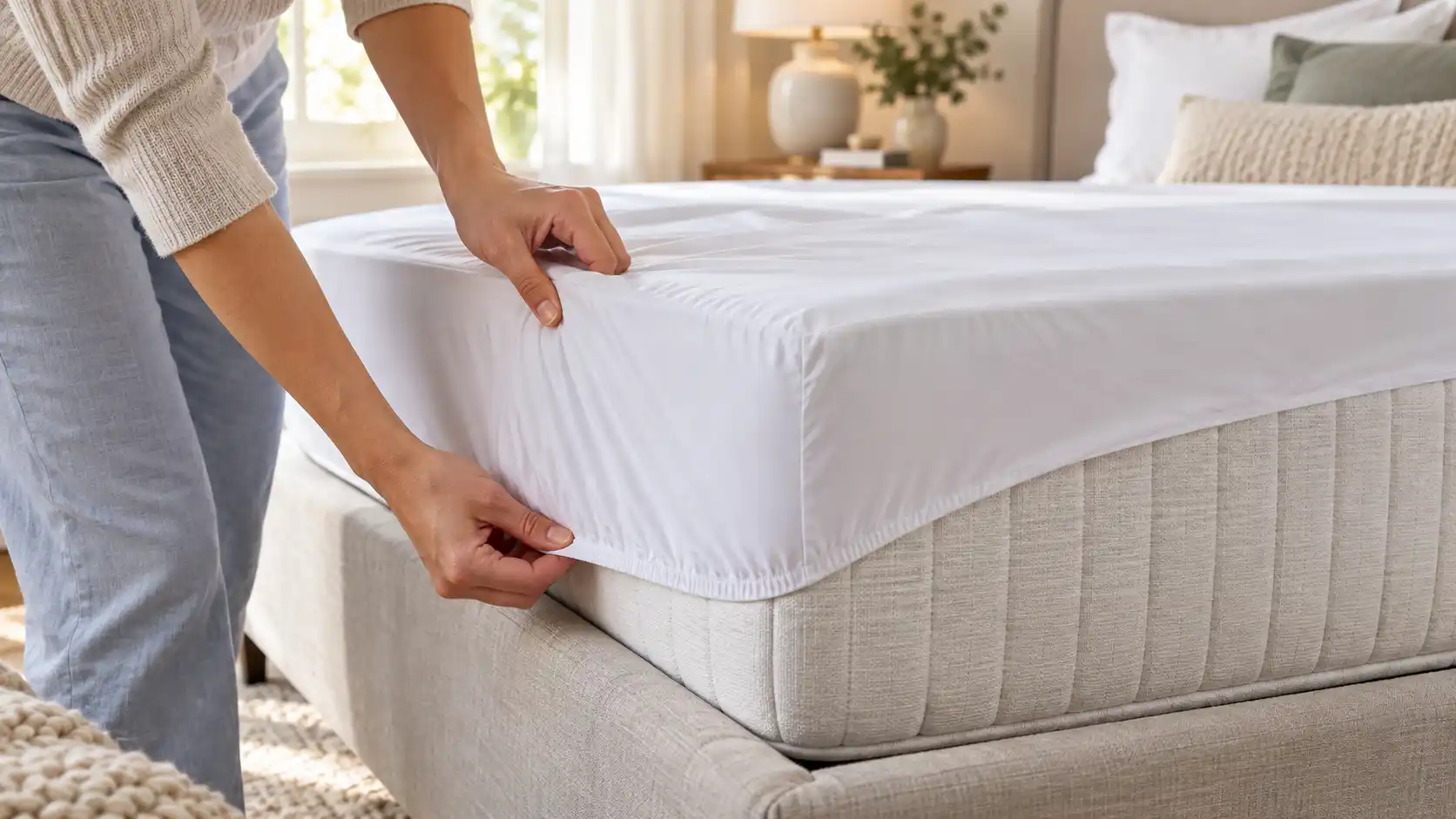
During that time it can be exposed to perspiration, body oils, accidental spills and other moisture. A protector creates a removable, washable layer between you and the mattress itself.
That can make everyday mattress care considerably easier.
It is much simpler to remove and wash a protector than to clean moisture or staining from the mattress.
A mattress protector is particularly worth considering for:
- new mattresses
- children’s beds
- guest rooms
- homes with pets
- people who eat or drink in bed
- anyone who wants an easier-to-clean sleep surface
Even when spills are unlikely, everyday moisture is still something your mattress encounters over time.
A Good Protector Should Protect the Mattress, Not Hide It
If you carefully chose a mattress because you loved how it felt in the showroom, you should not have to sacrifice that comfort simply to protect it.
The key is choosing the right type of protector.
For most people, that means looking for a protector that is thin, breathable, flexible and appropriately sized for the mattress.
Avoid assuming that thicker automatically means better.
If protection is your main goal, you generally want the protector to do its job quietly in the background while allowing the mattress underneath to provide the comfort.
Try the Mattress and Protector Together
If you are uncertain, ask about mattress protection while you are shopping for your mattress.
Different mattress constructions can respond differently to additional bedding layers, and a knowledgeable mattress specialist can help you choose a protector that complements your particular bed.
This is especially useful if you are purchasing a very plush mattress, memory foam mattress or temperature-conscious sleep system.
At The Sleep Center, we can help you look at the complete sleep setup rather than simply the mattress by itself.
That includes helping you find a mattress that suits the way you sleep and accessories that help protect your investment without unnecessarily changing the comfort you chose.
Because when the bed already feels right, the goal of a mattress protector should be simple:
protect the mattress and let the mattress do the rest.
Take a Test Rest –
Visit the showroom at one of our six locations below,
- Panama City, FL: https://www.thesleepcenter.info/
- Ft. Walton, FL: https://www.thesleepcenter.us/
- Pensacola, FL: https://www.sleepcentersuperstores.com/
- Gainesville, FL (both locations): https://www.gainesvillesleepcenter.com/
- The Villages, FL: https://www.sleepcentervillages.com/
Explore Mattress Education
Put what you’ve learned into practice.
Visit a Sleep Center showroom to compare mattresses and sleep products in person with pressure-free help from experienced specialists.
Find a Sleep Center